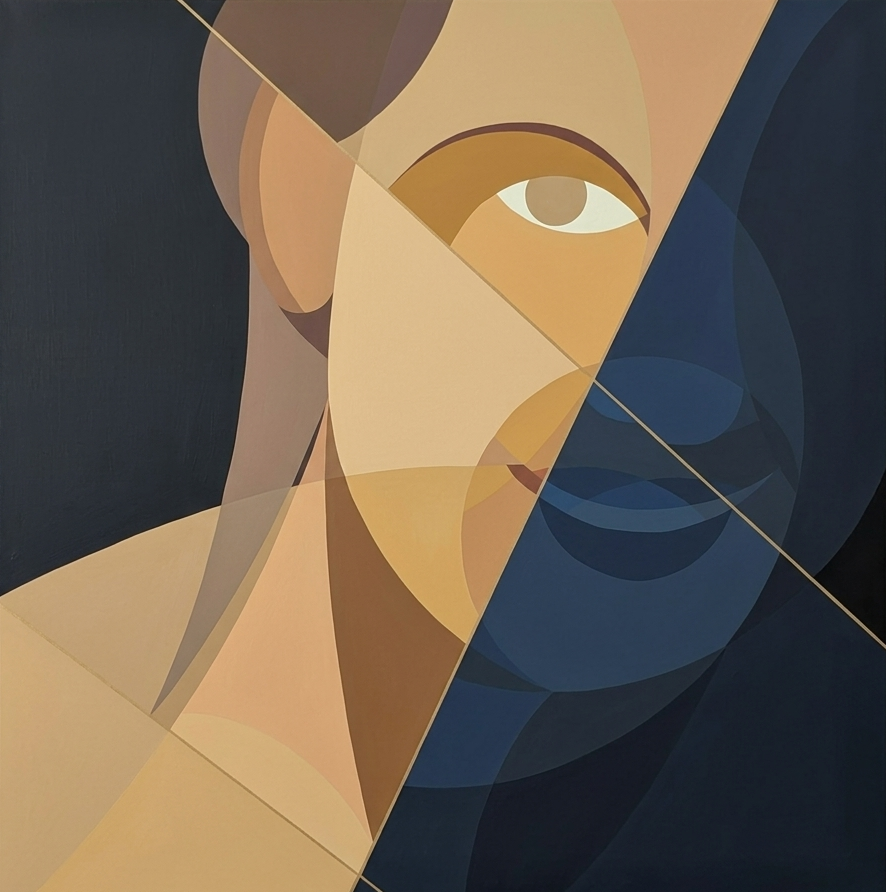


Approximation of Silence
The words had finally dissolved, the echoes of the last conversation had faded, and only the face remained – a map of lines and shadows, suspended in a space where time no longer moves. Her presence felt like a shore after a tide, a place where the storm of emotion had retreated, leaving behind a crystalline, structured stillness.
There was no longer any need for explanation. She rested within the geometry of her own being, reconciled with the fact that some truths are better left unsaid. The strength of the portrait arises precisely from that tension between the lingering light in her eyes and the deepening shadow of her smile – a calm so deliberate that it becomes a source of quiet power.
From the fragmented planes of her face radiated not a loss of self, but an unwavering focus. A silence so clear that it was, in itself, a testament to everything that had once been loud and chaotic. She was no longer just a person; she was an equilibrium – simple, structured, and yet undeniably present – she was a world falling into order.
***
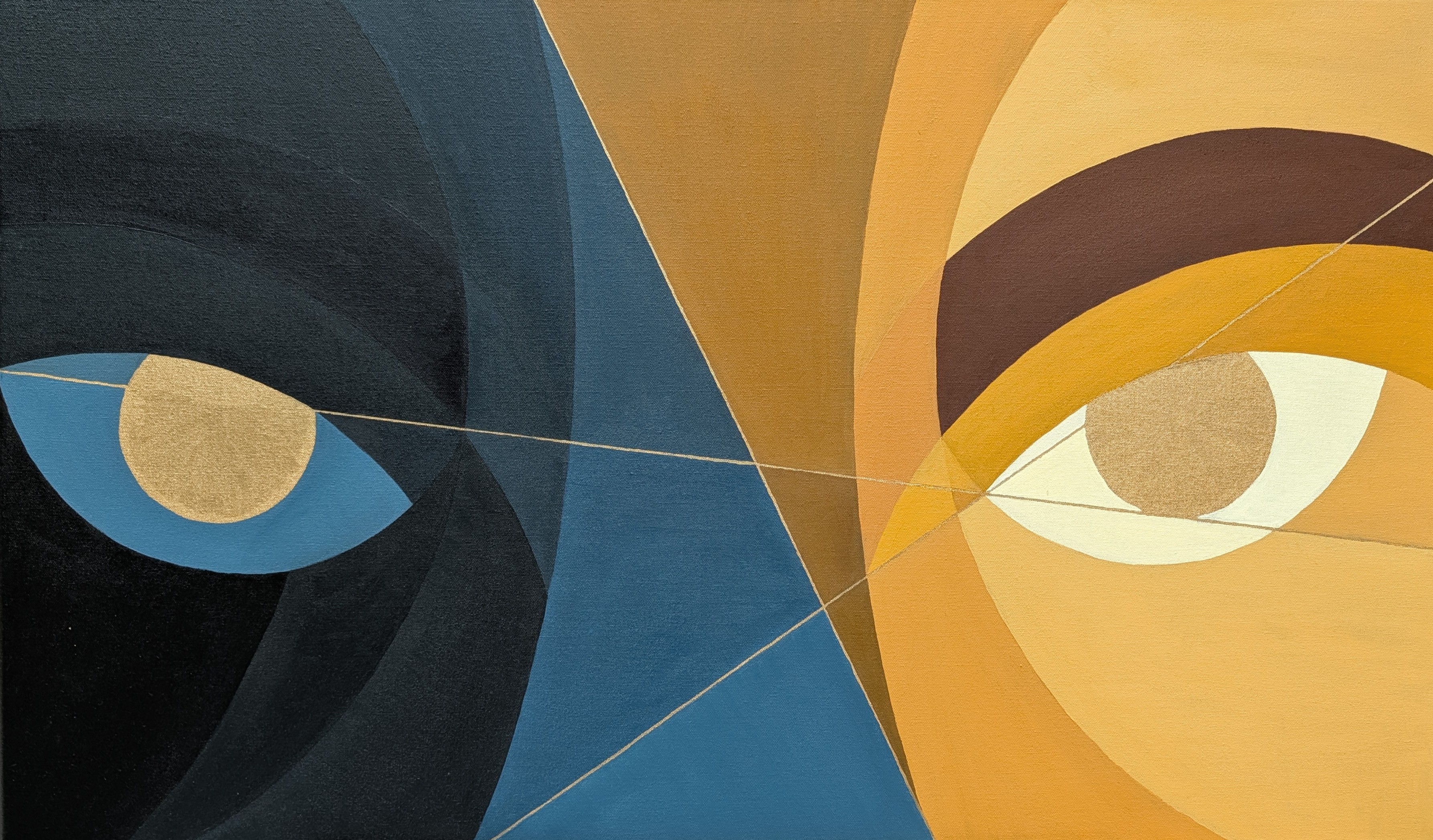
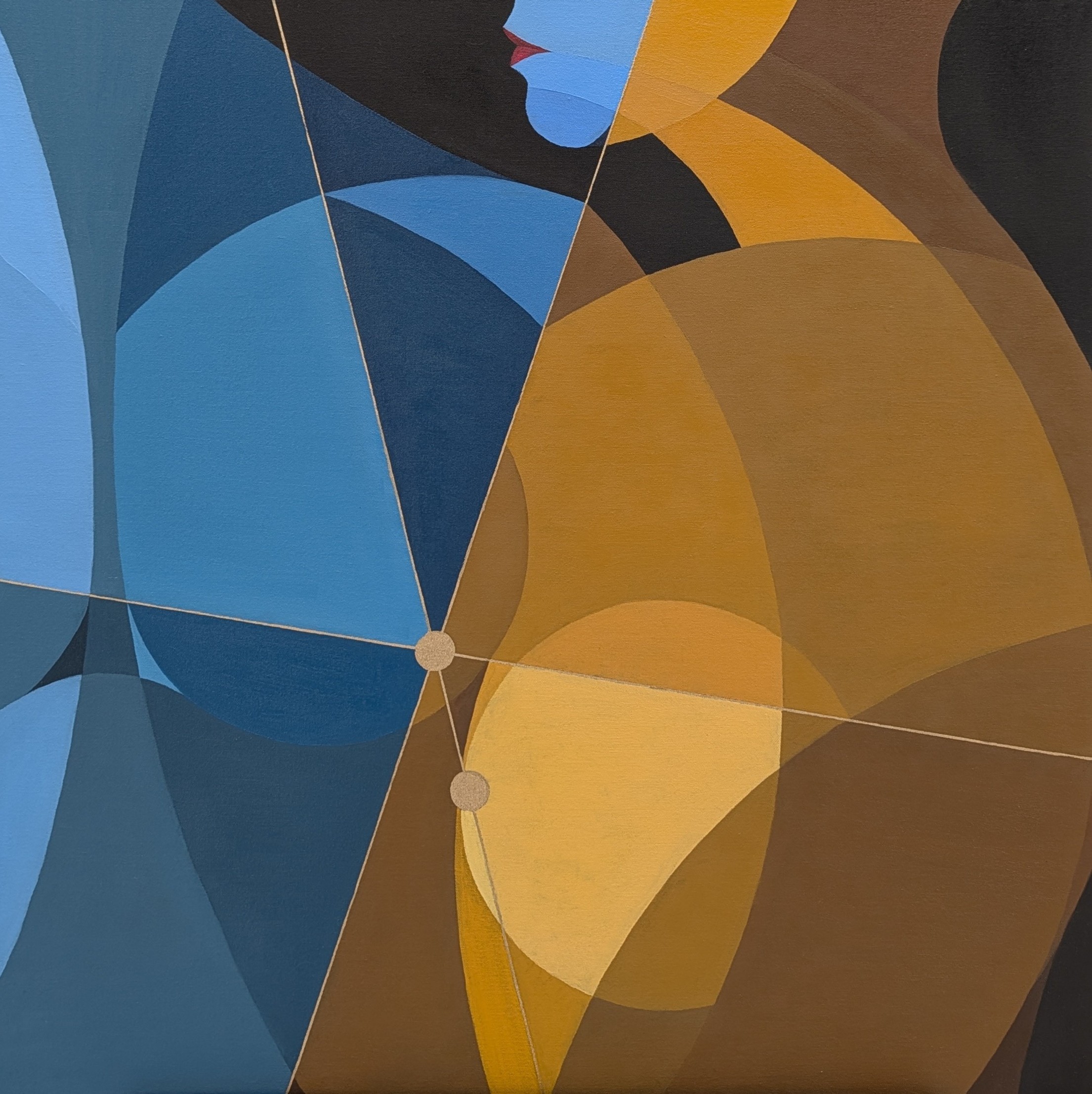
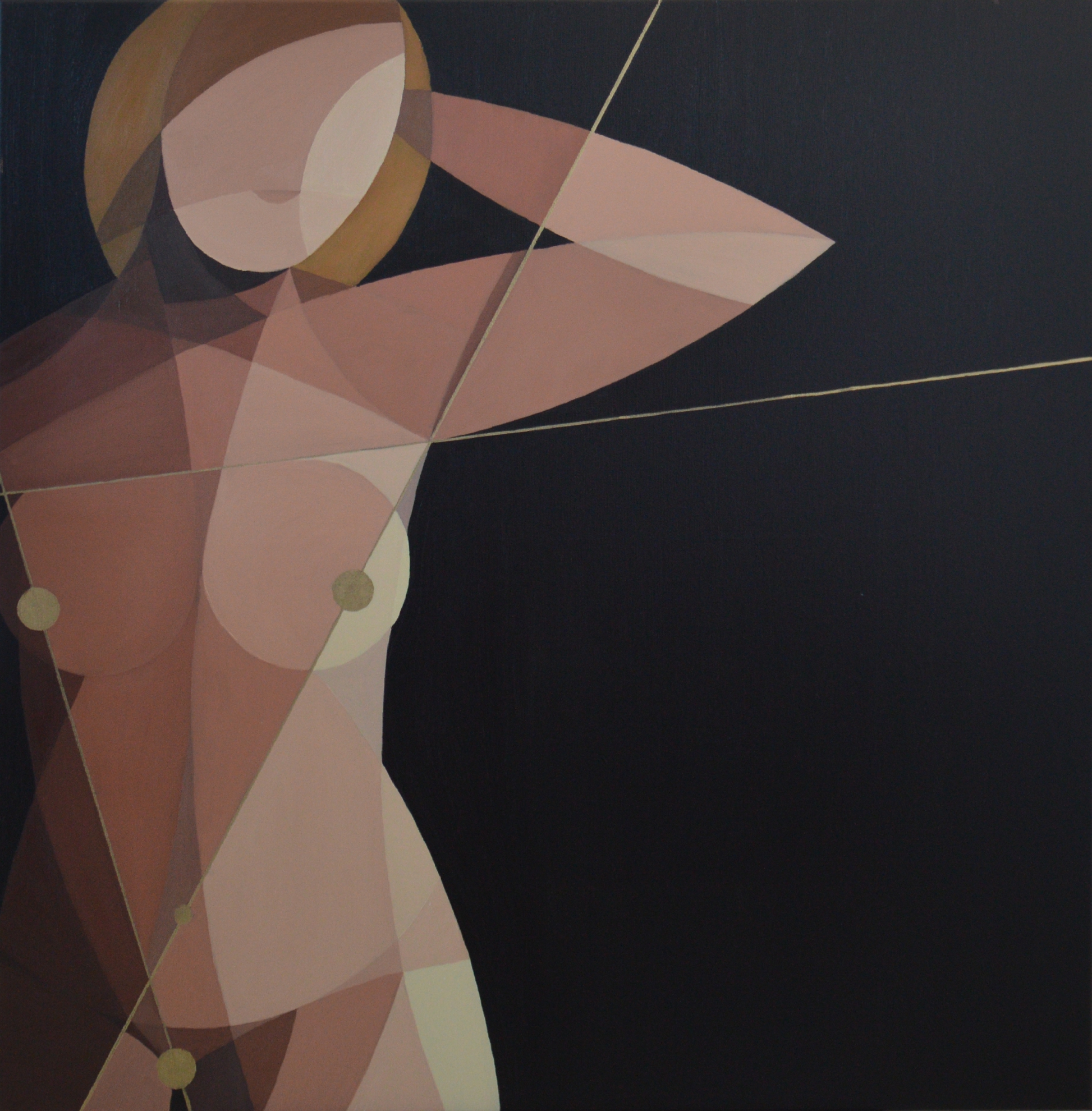
This oil painting, titled Approximation of Silence, is realized in the artist’s signature Geometric Deconstruction style, where the human visage is reimagined through the prism of analytical precision. Intersecting diagonals and meticulously placed arcs break the familiarity of the portrait, creating a visual field where emotion is filtered through the rigor of logic. The composition is bisected by a sharp, luminous line that acts as a boundary between the revealed and the concealed.
The upper portion of the face is anchored by a single, focused eye, rendered within a warm, golden segment that captures the light of a fading thought. In stark contrast, the lower half – characterized by a subtle, lingering smile – is submerged in deep, monochromatic blues and shadows. This deliberate use of dark, uniform planes transforms the "American smile" into a silent architectural element, stripping away its social function to reveal its underlying form.
Approximation of Silence explores the delicate balance between the rational and the felt. The deconstructed form exudes a serene melancholy – not from a sense of brokenness, but from the luminous order found in the aftermath of a storm. The interaction of light, shadow, and geometry allows the viewer to feel the weight of what is unspoken, without the need for literal narrative.
As in the artist’s other works, such as Fragmented Thoughts, this painting invites contemplation on the limits of understanding. Every line and plane is not only a compositional device but a meditation on the quiet power of the mind to find harmony within fragmentation, a reflection of a soul approaching its own mathematical limit of peace.